Ubuntu TechHive

// events

Tech Events & Workshops

Discover and join virtual tech events, workshops, and meetups from the Ubuntu community worldwide. Connect with developers, engineers, and tech enthusiasts.

0

Today

0

Upcoming

34

Virtual

34

Total

PastThe Ubuntu TechHive Online

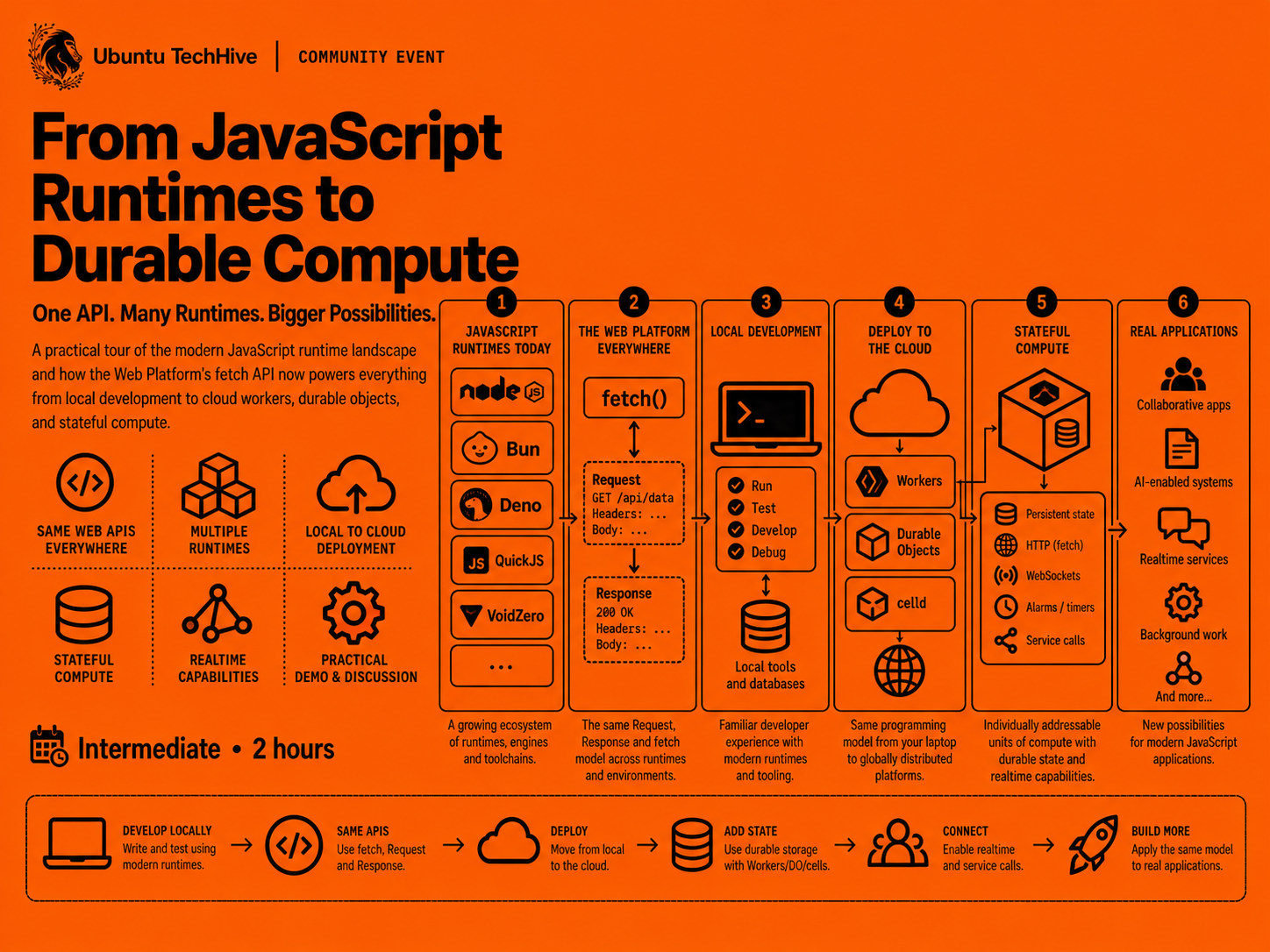
From JavaScript Runtimes to Durable Compute

# From JavaScript Runtimes to Durable Compute A practical two-hour tour of how JavaScript execution has evolved from traditional local runtimes into a broader computing platform spanning development machines, servers, cloud workers, and durable stateful applications. The session explores the changing role of JavaScript runtimes and the growing importance of Web Platform APIs as a common programming model across environments. We will look at how familiar concepts such as requests, responses, asynchronous I/O, and `fetch` now connect everything from ordinary API calls and web servers to cloud execution and increasingly sophisticated stateful computing models. From there, we will explore one of the more interesting shifts happening in server-side development: moving beyond stateless request handlers toward individually addressable units of computation that can own persistent state, communicate with other services, and survive beyond a single request or process. Rather than comparing runtimes feature by feature, the goal is to develop a useful mental model for how the JavaScript ecosystem is changing, what is becoming portable across environments, and how these changes affect the way modern applications can be designed. Audience: developers and learners interested in JavaScript, backend development, cloud computing, or modern application architecture. No prior experience with alternative runtimes or distributed systems is required. Outcomes: - Understand how the role of the JavaScript runtime has expanded beyond the traditional server process - Recognize Web Platform APIs as an increasingly common interface across local and cloud environments - See how the `Request`, `Response`, and `fetch` model connects client, server, and service-to-service communication - Distinguish stateless request processing from durable stateful computation - Understand the basic idea behind addressable units of compute that own their own persistent state - Explore how these models affect realtime applications, collaboration, AI-enabled systems, and other stateful workloads - Develop a clearer framework for evaluating new JavaScript runtimes and computing platforms as the ecosystem continues to evolve Format: two hours with a concise tour of the changing JavaScript runtime landscape, progressively deeper examples, a focused live demonstration of stateful compute, discussion of architectural tradeoffs, and questions and answers.

Abidjan, Côte d'Ivoire · October 31, 2026 · 10:30 AM · EDT · 2 hours
PastThe Ubuntu TechHive Online

Your Codebase, Your Rules: Beyond Standard Linters

A practical two-hour session on turning code quality expectations and team conventions into automated checks so developers and coding agents get feedback on what belongs in your codebase, not just what compiles. Code can run correctly and still break your team’s rules: too many branches in one function, business logic in the wrong directory, or calls that bypass an approved API. Through small working demos, we will make these violations visible, adjust complexity thresholds, and implement conventions that no standard linter knows about. The emphasis is on making your expectations executable. Instead of repeating a convention in every prompt or code review, we will express it as a check that identifies violations and provides concrete feedback for correcting them. We will also distinguish likely bugs from team preferences, and explore why passing every check does not automatically mean good design. Audience: developers, technical leads, and architects interested in keeping codebases consistent as human and AI-generated contributions grow. No prior experience writing custom checks is required. Outcomes: * Distinguish correctness checks, complexity measurements, and team-defined conventions * Configure a complexity threshold and observe its effect on otherwise unchanged code * Implement custom rules about where particular functions and dependencies belong * Enforce application-specific naming conventions beyond a tool’s built-in defaults * Understand when inspecting syntax is sufficient and when deeper analysis is needed * Give developers and coding agents actionable feedback rather than repeated reminders * Recognize what automated checks can enforce—and what still requires judgment Format: two hours with a short introduction, small working demonstrations, deliberate rule violations, discussion of tradeoffs, and questions and answers.

Abidjan, Côte d'Ivoire · September 19, 2026 · 10:30 AM · EDT · 2 hours

PastThe Ubuntu TechHive Online

From Idea to Live Web App: Building with Humans and AI Agents on Buzz

## What to Expect AI assistants can help one person write code. The more interesting question is what happens when humans and AI agents work together on a real product, with the conversation, decisions, reviews, and work kept in one shared place. Join us for a beginner-friendly live build using Buzz, an open-source workspace designed for humans and AI agents to collaborate. We will start with a real but deliberately incomplete product brief, work through research, design, implementation, and review, and finish by deploying a working web application that you can open in your browser. The application will be revealed during the session. This gives the community room to follow the work as it develops, contribute ideas, and see how a small team can move from an uncertain starting point to a useful deployed result. The focus is not only the application itself, but the collaboration process that makes the build understandable, reviewable, and repeatable. No prior Buzz, Nostr, or AI-agent experience is required. You will be invited to join the Ubuntu TechHive Buzz community, follow the build channel, ask questions, inspect the human-and-agent work trail, and continue the conversation with supporting material after the event. ## What We’ll Build Together - Start from an incomplete product idea and clarify what is worth building. - Use Buzz as the shared room for human decisions, agent research, implementation, and review. - Turn the selected direction into a browser-based web application. - Deploy the result to a public URL during the session. - Test the deployed application and discuss what should happen next. The exact application, framework, and feature list will be revealed as the build unfolds. That is part of the event: the audience gets to see the product take shape instead of watching a finished demo with all of the uncertainty removed. ## Agenda - Introduction: From individual AI assistants to teams of humans and agents building together. - Getting oriented: What Buzz is, how to join the community, and how channels, identities, agents, and project history work. - The live build: Open the brief, explore the problem, delegate work, make design decisions, implement the web application, and review the result in Buzz. - Deployment: Publish the working application to a public web URL and test it live with the audience. - What happened behind the scenes: Trace the useful decisions, rejected ideas, agent contributions, and human approvals in the Buzz channel. - Keep building with us: Join the community, read the supporting article, try the deployed result, and suggest the next improvement. - Questions and answers: Discuss Buzz, agent collaboration, web development, open-source workflows, and the live build. ## Who Should Attend? - Developers and learners curious about AI-assisted web development. - People who use AI coding tools but want to understand collaboration with multiple agents and human teammates. - Open-source developers interested in building in public and self-hostable tools. - Community members who enjoy seeing real software take shape through a live demonstration. - Beginners who want to learn what Buzz is by watching it solve a concrete problem. ## What You’ll Learn - Explain what Buzz is without prior knowledge of the platform. - Understand how human and agent identities can share a project workspace while keeping authorship and responsibility clear. - See a practical workflow for turning an incomplete brief into a reviewed web application. - Recognize how channels, history, search, and agent identity support better collaboration. - Join the [Ubuntu TechHive community on Buzz](https://ubuntu-techhive.communities.buzz.xyz/invite/v2.ipzGEj2p4HjIwM07OxfhZ_D-5A_38st6LP231xwUT6c) and find the live build and community-projects channels. - Evaluate where this approach could be useful in your own projects.

Abidjan, Côte d'Ivoire · August 8, 2026 · 2:30 PM · UTC · 2 hours

PastThe Ubuntu TechHive Online

Building Document Question-Answering Systems with Rust

A practical two-hour session on the principles behind document question-answering systems, with Rust as the implementation context. The session focuses on how applications can answer questions from a known set of documents instead of relying only on what a language model already knows. We will cover the core workflow: loading documents, preparing them for search, finding relevant passages, passing useful context to a model, and producing answers that stay connected to the source material. The goal is to teach the engineering ideas behind RAG systems without turning the session into a product demo or an abstract AI lecture. The emphasis is on system boundaries, retrieval quality, answer grounding, error handling, and the practical decisions developers need to make when building document-aware applications. Audience: entry-level and intermediate developers who want a practical session on document search, retrieval, grounded generation, and Rust application design. Outcomes: * Understand how document-based question answering systems work * Explain the purpose of chunking, embeddings, retrieval, and context assembly * Design a simple retrieve-first, answer-second workflow * Use Rust to organize the main parts of a small RAG application * Recognize common causes of poor or unsupported answers * Apply basic techniques for improving retrieval and answer quality * Think about how to evaluate whether the system is actually useful Format: two hours with a short framing walkthrough, a concrete example, discussion of tradeoffs, and a closing checklist for practice.

Abidjan, Côte d'Ivoire · July 11, 2026 · 10:30 AM · EDT · 2 hours

PastThe Ubuntu TechHive Online

The Polylith Mindset: Build Faster Across Multiple Projects

We can now generate code faster than ever, but that creates a new problem: teams can also generate confusion, duplication, and fragile architecture faster than ever. In this session, we'll explore how to design software systems that help both humans and AI move faster safely. The focus is on clear module boundaries, reusable components, stable interfaces, validation contracts, and Polylith-inspired thinking from the Clojure ecosystem. ## What We'll Cover - **Modular Architecture for AI-Assisted Development:** Structure large systems so features have clear ownership and predictable boundaries. - **Interfaces as Guardrails:** Use narrow interfaces to make code easier to replace, test, and reason about. - **Contracts & Validation:** Treat validation rules and schemas as a shared source of truth between humans, tools, and AI agents. - **Multi-Project Reuse:** Learn how shared components can support multiple products without turning into a tangled framework. - **Metaprogramming & Automation:** Use macros, code generation, and declarative patterns to reduce repetitive implementation work. ## Why Attend? If you're using AI to build software, the real question is no longer "Can it write code?" The question is: **can your architecture absorb that speed without collapsing under complexity?** This talk is for developers who want to build larger systems faster while keeping the codebase understandable, testable, and adaptable.

Abidjan, Côte d'Ivoire · May 30, 2026 · 2:30 PM · UTC · 2 hours

PastThe Ubuntu TechHive Online

Building a voice agent for your business

Join us for a practical, business-focused session on building a **voice agent** that can answer calls, collect useful information, and trigger real workflows behind the scenes. Voice AI is moving quickly from demos into real business operations. In this session, we'll look at how to connect a conversational voice layer to a backend and an event-driven workflow so your agent can do more than talk: it can capture leads, record context, publish events, and kick off follow-up actions. ## What We'll Cover - **Vapi for Voice Agents:** Build a real-time voice assistant for web or phone conversations, handle call events, and connect the agent to custom tools and backend APIs. - **Supabase as the Business Backend:** Use Postgres, Auth, Realtime, and Edge Functions to store customer context, call outcomes, transcripts, and structured lead data. - **Google Cloud Pub/Sub for Async Workflows:** Publish call events to topics so downstream services can process notifications, analytics, CRM sync, and follow-up tasks without blocking the conversation. - **End-to-End Business Flow:** Map an inbound conversation into a durable workflow: greet the caller, qualify the request, save the data, and trigger the next business action. - **Reliability & Human Handoff:** Discuss logging, retries, acknowledgements, escalation paths, and where a voice agent should stop and hand the conversation to a person. ## Session Flow - Architecture walkthrough: voice layer, backend layer, event layer - Vapi assistant setup and tool-calling strategy - Supabase schema and Edge Function integration - Publishing business events through Google Cloud Pub/Sub - Practical discussion: what makes a voice agent useful, safe, and maintainable ## Perfect For - Business owners exploring AI-powered customer workflows - Developers building voice, automation, or backend integrations - Teams interested in lead capture, appointment routing, support intake, or call automation - Anyone curious about connecting AI agents to real production systems Whether you're new to voice agents or already experimenting with AI automation, this session will give you a practical mental model for building a voice workflow that fits real business needs.

Abidjan, Côte d'Ivoire · May 16, 2026 · 2:30 PM · UTC · 2 hours

PastThe Ubuntu TechHive Online

Save Tokens and Build with Data-Driven Clarity using Clojure(Script) -- Part 2

We've all seen it: you ask an AI for a simple feature, and it returns a 50-line wall of boilerplate filled with nested interfaces and redundant logic. As engineers, we still have to read, understand, and debug that code. The more "noise" in our stack, the more room there is for hallucinations, and the harder it is for us to spot them. This Saturday, we're exploring how to cut through that noise. We'll look at Clojure(Script), a language where code is data. By reducing the surface area of our syntax, we don't just save tokens; we gain a level of clarity that makes it easier for humans to reason about their systems and for AI to stay on track. *The "Honesty" Stack:* - **Malli as the Source of Truth:** Learn how shared schemas act as a "Contract of Honesty." Whether a human wrote the code or an LLM generated it, Malli ensures the data remains valid before it ever touches your logic. - **Hiccup & Replicant:** See how UI development changes when your DOM is just a data structure. We'll use Replicant to demonstrate how pure-data templates (Hiccup) lead to high-performance, predictable interfaces without the "magic" of complex frameworks. - **HoneySQL:** Why write strings when you can write maps? We'll show how database queries become searchable, composable data, keeping your persistence layer as clear as your business logic. - **The Living REPL:** Experience a tight feedback loop where you evaluate snippets instantly in a running environment. It's the ultimate tool for verifying behavior and ensuring that what you (or your AI) just wrote actually works. ## Why Attend? If you're looking for a way to build robust, verifiable systems without the weight of traditional boilerplate, this talk is for you. We aren't here to talk about AI doing your job - we're here to talk about how Clojure(Script) makes you a more effective architect of the code you produce.

Abidjan, Côte d'Ivoire · April 29, 2026 · 2:30 PM · UTC · 2 hours

PastThe Ubuntu TechHive Online

Save Tokens and Build with Data-Driven Clarity using Clojure(Script)

We've all seen it: you ask an AI for a simple feature, and it returns a 50-line wall of boilerplate filled with nested interfaces and redundant logic. As engineers, we still have to read, understand, and debug that code. The more "noise" in our stack, the more room there is for hallucinations, and the harder it is for us to spot them. This Saturday, we're exploring how to cut through that noise. We'll look at Clojure(Script), a language where code is data. By reducing the surface area of our syntax, we don't just save tokens; we gain a level of clarity that makes it easier for humans to reason about their systems and for AI to stay on track. *The "Honesty" Stack:* - **Malli as the Source of Truth:** Learn how shared schemas act as a "Contract of Honesty." Whether a human wrote the code or an LLM generated it, Malli ensures the data remains valid before it ever touches your logic. - **Hiccup & Replicant:** See how UI development changes when your DOM is just a data structure. We'll use Replicant to demonstrate how pure-data templates (Hiccup) lead to high-performance, predictable interfaces without the "magic" of complex frameworks. - **HoneySQL:** Why write strings when you can write maps? We'll show how database queries become searchable, composable data, keeping your persistence layer as clear as your business logic. - **The Living REPL:** Experience a tight feedback loop where you evaluate snippets instantly in a running environment. It's the ultimate tool for verifying behavior and ensuring that what you (or your AI) just wrote actually works. ## Why Attend? If you're looking for a way to build robust, verifiable systems without the weight of traditional boilerplate, this talk is for you. We aren't here to talk about AI doing your job - we're here to talk about how Clojure(Script) makes you a more effective architect of the code you produce.

Abidjan, Côte d'Ivoire · April 15, 2026 · 2:30 PM · UTC · 2 hours

PastThe Ubuntu TechHive Online

Let's find out what OpenClaw is all about...

Join us for an engaging session about **OpenClaw**, an AI assistant that helps with practical daily tasks like: - 📧 Managing your inbox and sending emails - 📅 Organizing your calendar - ✈️ Handling flight check-ins - 🔄 And much more automation ## What We'll Cover - 🔍 **Explore capabilities**: See what OpenClaw can actually do - ☁️ **Cloud setup**: Learn how to get it running in the cloud - 💬 **Chat integration**: Connect it to WhatsApp, Telegram, or your preferred chat app - 🤝 **Interactive session**: Hands-on exploration designed for everyone Whether you're curious about AI automation or looking for tools to boost your productivity, this session welcomes participants of all technical backgrounds. **When**: Saturday, February 7th, 2026 at 10:30 AM ET **Duration**: 2 hours **Format**: Online meeting Ready to discover what OpenClaw can do for you? Let's explore together! 🚀

Abidjan, Côte d'Ivoire · February 7, 2026 · 2:30 PM · UTC · 2 hours

PastThe Ubuntu TechHive Online

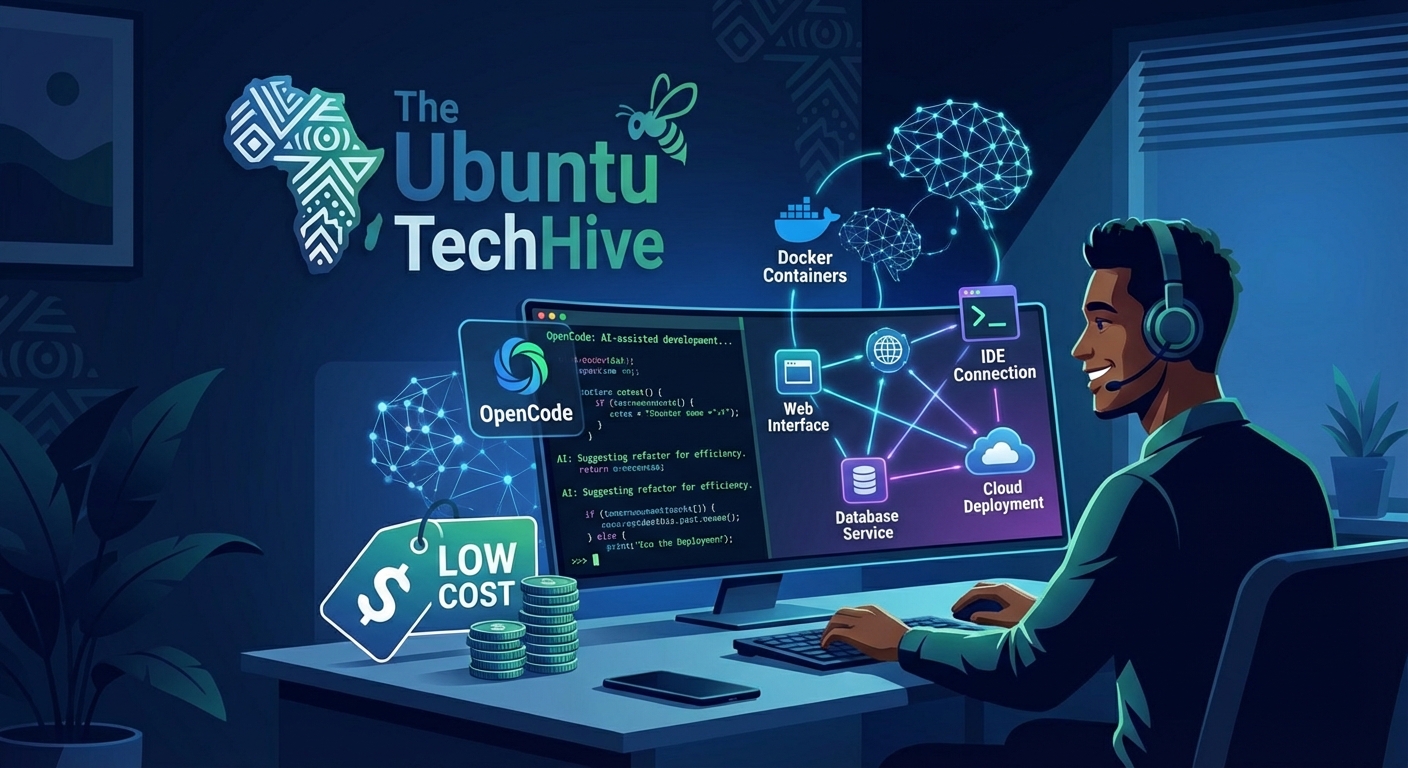
Agentic Coding on the Cheap - Part 2: OpenCode & Beyond

**Ready to supercharge your coding workflow without breaking the bank?** Join us for the exciting sequel to our popular agentic coding session! This time, we're diving deep into **OpenCode** - the powerful open-source terminal-based AI coding agent - and exploring a complete ecosystem of self-hosted tools for AI-assisted development. ## What You'll Master Building on our Part 1 foundations, discover how to take your agentic coding to the next level with these game-changing tools: - 🖥️ **OpenCode** - Terminal-based AI coding agent supporting 75+ providers - 🔌 **MCP Servers, Agent Skills & Tools** - Extend your agent with external capabilities via Model Context Protocol - 🐳 **Docker Setup** - Run OpenCode in isolated containers for safe experimentation - ☁️ **Coolify** - Self-hosted PaaS alternative to Heroku/Vercel/Netlify - 🌐 **Server Mode & Web UI** - Deploy OpenCode as a headless service or browser interface - 💻 **IDE Integration** - Seamlessly connect OpenCode to VS Code, Cursor, and more ## Why This Matters *"The best AI agent is the one you can run for free"* Get hands-on experience with cutting-edge techniques that will revolutionize your development workflow. Learn to integrate MCP servers, Skills, and Tools for various software development tasks. Discover how to deploy your entire AI-powered development stack on your own servers with Coolify - **no vendor lock-in, no surprise bills!** Whether you attended Part 1 or you're just joining us, this session will equip you with advanced, actionable knowledge to supercharge your agentic coding journey today! **📅 Date:** January 24, 2026 **⏰ Time:** 10:30 AM Eastern Time **⏱️ Duration:** 2 hours **🌐 Format:** Online meeting Connect with our vibrant community: - [Discord](https://discord.gg/48dVXMenP9) - [WhatsApp](https://chat.whatsapp.com/Ic2PPvxzy8KCkB8Ww5kR39) - [LinkedIn](https://www.linkedin.com/showcase/the-ubuntu-techhive) - [Website](https://ubuntuhive.tech)

Abidjan, Côte d'Ivoire · January 24, 2026 · 2:30 PM · UTC · 2 hours

PastThe Ubuntu TechHive Online

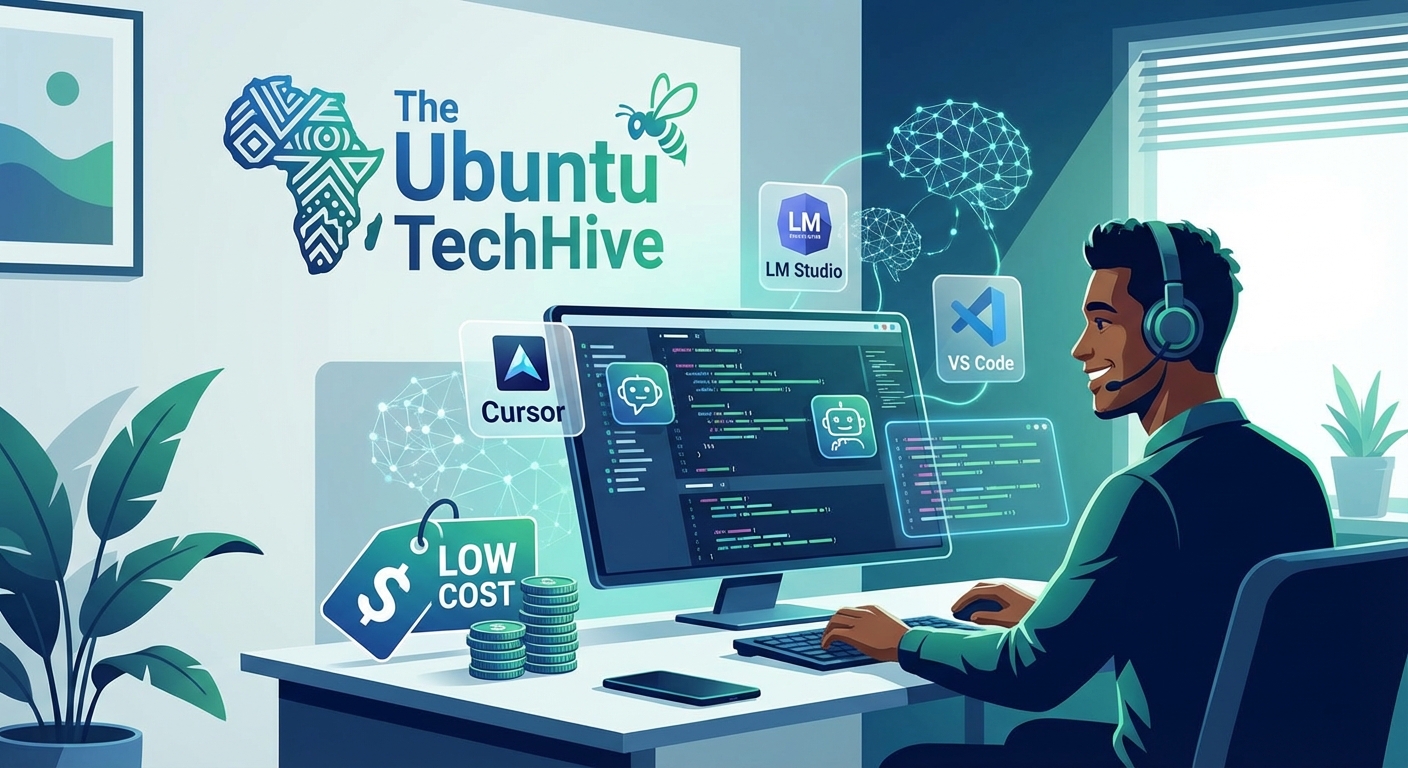
🤖 Agentic Coding on the Cheap

Join us for an eye-opening session where a seasoned software engineer shares their real-world experience with **Agentic Coding** - the revolutionary approach where AI agents become your coding companions! 💻✨ ## What You'll Learn 🎯 Discover how to harness the power of AI-assisted development without breaking the bank. Our presenter will demonstrate and explore an entire ecosystem of cost-effective tools: - **🏠 LM Studio** - Run large language models locally - **📝 VS Code Extensions** - Supercharge your favorite editor - **⚡ Cursor** - The AI-first code editor - **🔥 Kilo Code** - Lightweight coding solutions - **🤖 Continuous AI** - Automated development workflows - **🌐 Tailscale** - Secure networking made simple - **And much more!** 🚀 ## Why Attend? 🌟 > *"Software changed the world, and AI changed Software"* Get exclusive insights from a software engineering professional who has navigated this transformative landscape. Learn practical strategies, cost-saving tips, and real implementation stories that you won't find in tutorials. Whether you're a curious beginner or an experienced developer, this session will equip you with actionable knowledge to start your agentic coding journey today! **💬 Connect with our vibrant community:** - [Discord](https://discord.gg/48dVXMenP9) | [WhatsApp](https://chat.whatsapp.com/Ic2PPvxzy8KCkB8Ww5kR39) | [LinkedIn](https://www.linkedin.com/showcase/the-ubuntu-techhive) | [Website](https://ubuntuhive.tech)

Abidjan, Côte d'Ivoire · January 10, 2026 · 2:30 PM · UTC · 2 hours

PastThe Ubuntu TechHive Online

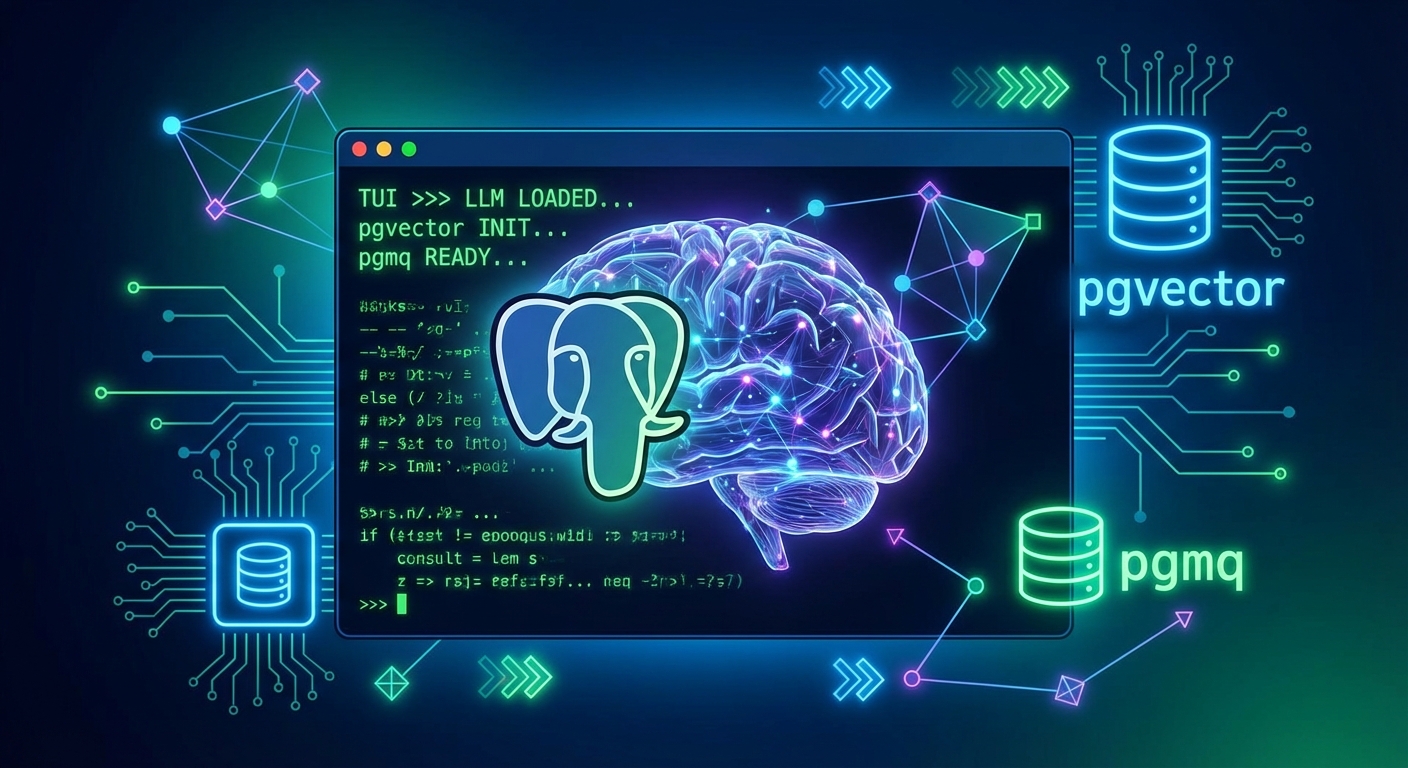
💻 Terminal Intelligence: Building AI-Powered Apps with PostgreSQL

Join us for an exciting hands-on workshop where Terminal User Interface (TUI) meets Artificial Intelligence! 🤖✨ What You'll Learn: 🐘 PostgreSQL Extensions for AI: Explore the **pgvector** and **pgmq** extensions 📝 Build a Smart Notes App: Create a TUI application with AI-powered features 🧠 Vector Databases in Action: Implement semantic search and retrieval-augmented generation (RAG) ⚡ Durable Code Execution: Learn how PostgreSQL can handle AI workflows 🔍 Modern AI Features: Experience how traditional databases can power cutting-edge AI applications Session Flow: Setup Phase: Configure PostgreSQL with AI extensions Implementation Phase: Build the TUI Notes App step-by-step AI Integration: Add intelligent features and see them in action Exploration: Push the boundaries and see how far we can go! Perfect for developers interested in database-driven AI, terminal applications, and practical machine learning implementations. No matter your experience level, you'll walk away with hands-on knowledge and a working application! 💪 📅 When: December 13, 2025 at 10:30 AM ET ⏰ Duration: 2 hours of intensive learning 🎯 Format: Interactive workshop with live coding Ready to explore the intersection of databases and AI? Let's build something amazing together! 🌟 Connect with our community: * 💬 **Discord**: https://discord.gg/48dVXMenP9 * 📱 **WhatsApp**: https://chat.whatsapp.com/Ic2PPvxzy8KCkB8Ww5kR39 * 💼 **LinkedIn**: https://www.linkedin.com/showcase/the-ubuntu-techhive * 🌐 **Website**: https://ubuntuhive.tech

Abidjan, Côte d'Ivoire · December 13, 2025 · 2:30 PM · UTC · 2 hours